By Robert M. Marovich
How did we let this boy get away from us?
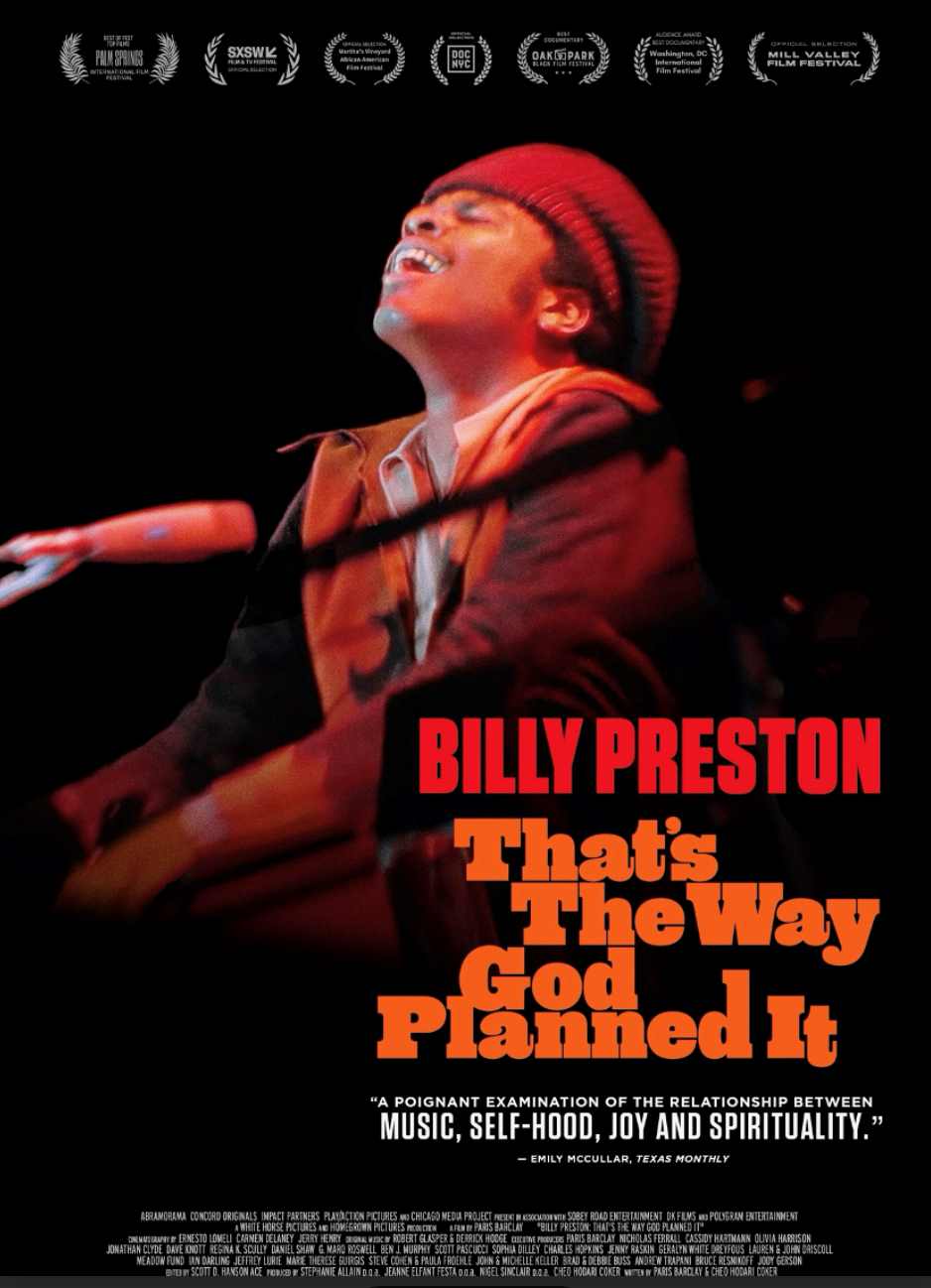
Singer Gloria Jones’ poignant rhetorical question in That’s the Way God Planned It, a vividly candid and elegiac portrayal of the life of Billy Preston, sums up the regret felt by many of Preston’s friends and fellow musicians who were interviewed for the documentary. We should have done more was a common sentiment. He was a beautiful human being and he deserved much better than he got. Indeed he was and indeed he should have. Preston’s death in 2006 at age 59 left an enormous void in popular and sacred music.
The documentary, directed by Paris Barclay and written by Barclay and Cheo Hodari Coker, debuted at SXSW in March 2024 and is being released in selected U.S. markets this year. It takes its title from Preston’s 1969 single, the first in a string of hits for himself and others that includes “Outa-Space,” “Nothing from Nothing,” “You Are So Beautiful,” “Will It Go Round in Circles,” and “With You I’m Born Again.”
Although the bulk of the 105-minute documentary focuses on Preston’s sundry contributions to secular music, his gospel roots receive a respectable amount of attention at the outset, especially his tenure with Andrae’ Crouch’s group the COGICS (COGIC members Sandra Crouch, Blinky Williams, and Gloria Jones are among the interviewees). There’s a brief video of Reverend James Cleveland reciting the lyrics to the hymn “How Great Thou Art” as Preston dazzles on the Hammond B3, a staged reprise of their 1962 duet on the second volume of the James Cleveland-Angelic Choir collaboration. The contributions made by others in Preston’s family tree, notably his mother Robbie and sister Rodena, are referenced. Preston’s work with Doris Akers, Bessie Griffin, and Cassietta George are not mentioned, neither is his time with Vee-Jay nor his 1957 disc with the Frazier-Goodson Gospel Singers, which might be his first gospel record, but then again, his gospel oeuvre could fill a documentary all by itself.
While gospel music was always a primary part of Preston’s musical palette, the singer, songwriter, and musician glided effortlessly between genres. Soul, R&B, rock ‘n’ roll, pop—he could play it all. He worked with the best of the best. The list included Ray Charles, the Beatles, Little Richard, the Rolling Stones, Eric Clapton, Neil Diamond, Norah Jones, Aretha Franklin, and the Red Hot Chili Peppers. He made the best even better. His ability to light up a room, ease tensions, and adapt quickly to the musical moment rescued the Beatles from their creative dry spell during the recording of Let It Be and Abbey Road.
Given Preston’s extensive resume, the documentary asks early on why there has not been more biographical coverage of the man. Biographer David Ritz has an answer: a book was in the works but was ultimately dropped after Preston was reticent to share with Ritz details about his private life. Over the course of the film, we learn that these included his struggle to hide his homosexuality and the allegations that he was sexually molested as a child. While a couple of interviewees didn’t recall Preston dating women or men, they understood that the fellows he introduced them to as a “cousin” or “nephew” weren’t relatives. Kathy Sylva’s alleged relationship with Billy was labeled an “arrangement” and the Syreeta-Billy pairing on the heels of their magical duet on “With You I’m Born Again” was media hype to obfuscate Billy’s sexuality in an era when coming out publicly could crush a career and create a maelstrom of criticism. For someone like Preston, who was born and raised around conservative church folk, public proclamation of gayness was almost unthinkable. You just smiled and suffered in silence.
Whatever shame or fear that the boyhood demons brought upon Preston were released through his music, but later through alcohol and drugs. Drink turned Preston’s cheery personality into one of anger and aggression. Said one interviewee, “Courvoisier turned him into a different person.” Drug and assault charges landed Preston in prison, and subsequent kidney problems contributed to his passing in 2006. The “tortured genius” and Pagliacci tropes are cliché, but when it comes to Billy Preston’s life story, both contain elements of the truth.
Given the sweep of Preston’s work, the documentary benefits from an impressive number of interviews from an impressive number of top artists, including Ringo Starr, Billy Porter, Mick Jagger, Merry Clayton, George Harrison’s sister Olivia Harrison, and Eric Clapton, whose own past battles with alcohol led him to try and help Billy defeat his addiction. Clips of Preston’s own reflections on his life add to the authenticity of the narrative.
Watching That’s the Way God Planned It is a little like going to church: the music draws you in and the message keeps you there. The soundtrack is incredible, as expected, and the film’s clear-eyed analysis covers uncomfortable truths without being salacious. The filmmakers did what I hoped they would do: showcase Preston’s musical genius but not sugarcoat or make him out to be anything other than human. Still, when describing Preston’s darkest days, the film does it with dignity and respect for a man whose warmth, creativity, and professionalism endeared him to all who worked with him. And the music—my God, the music itself makes the film worth seeing.
Written by : Bob Marovich

Bob Marovich is a gospel music historian, author, and radio host. Founder of Journal of Gospel Music blog (formally The Black Gospel Blog) and producer of the Gospel Memories Radio Show.